About
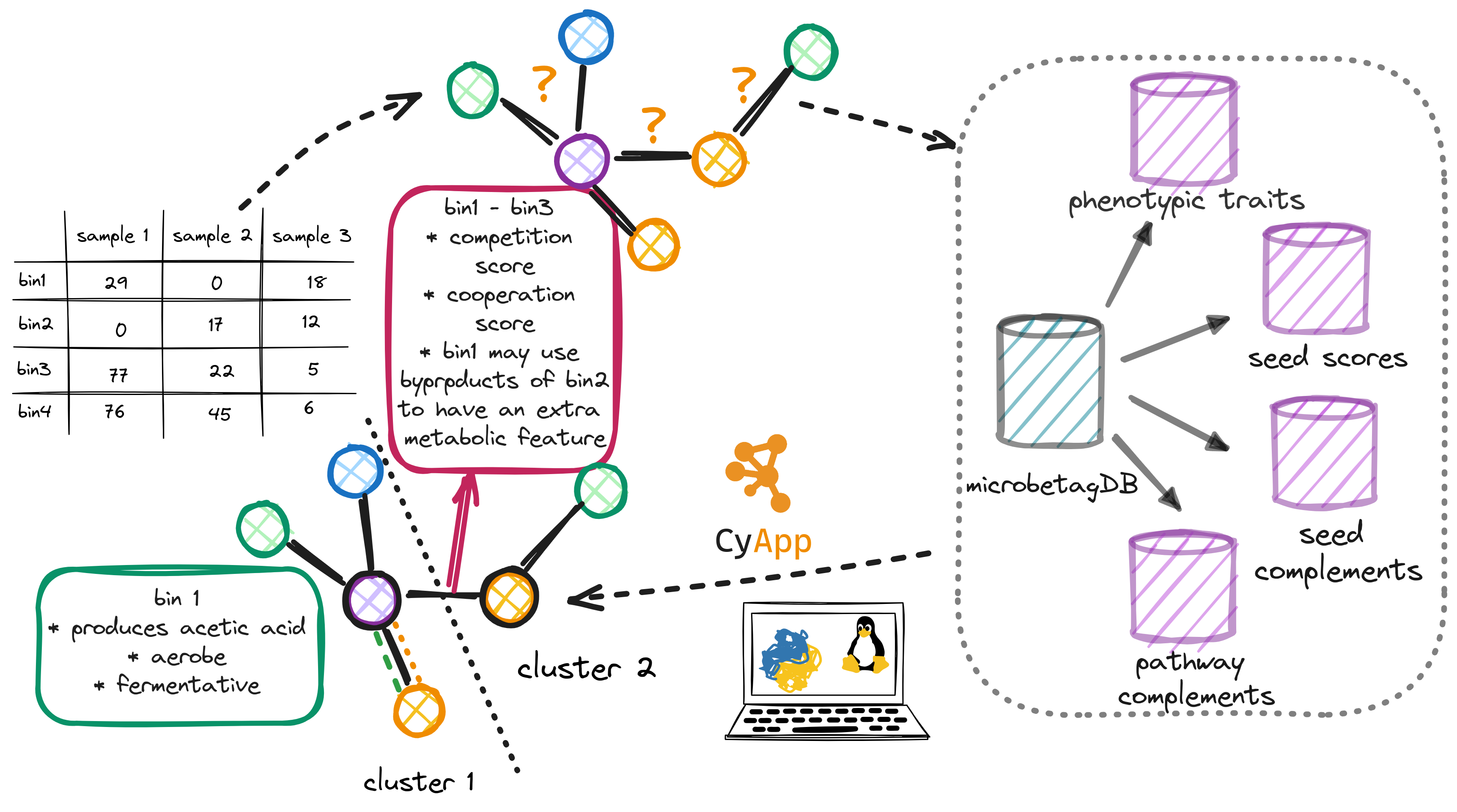
Co-occurrence networks have been widely used for inferring microbial associations or/and interactions from metagenomic data. However, spurious associations and tool - dependence confine the network inference. The integration of previous evidence or/and knowledge can increase or decrease the confidence level of the retrieved associations. This way, associations can be further investigated, and more reliable conclusions can be drawn.
microbetag implements data integration techniques to annotate both the nodes (taxa) and the edges (predicted associations) of such a network, to enhance microbial co-occurrence network analysis for amplicon data. Combined with network clustering and enrichment analysis, microbetag can benefit microbial co-occurrence network interpretation and provide hypothesis to be further tested.
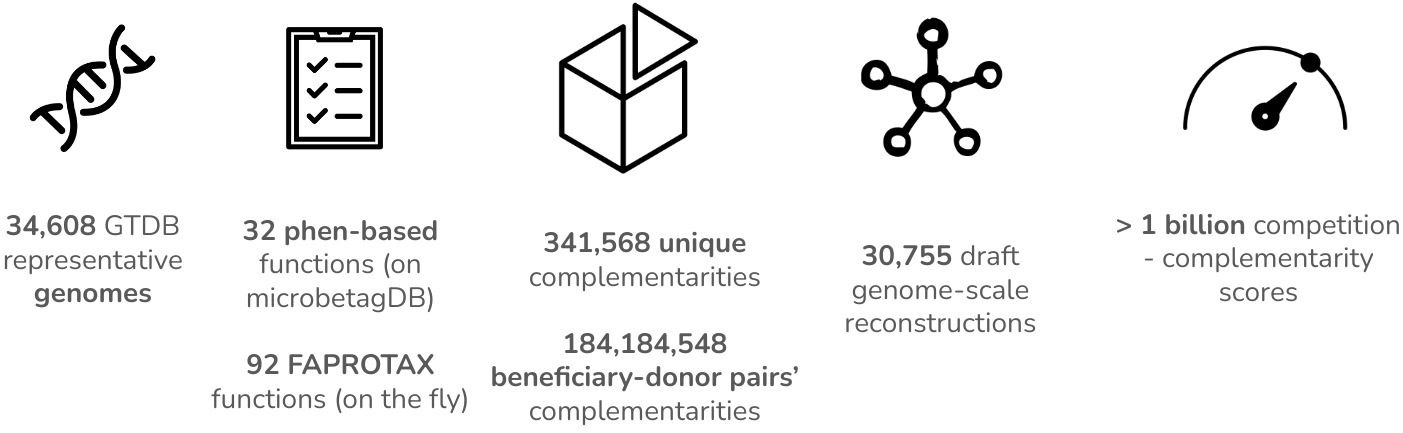
A detailed description of microbetag’s modules outlines the various information channels. microbetag can be used through two usage modes. We provide a series of tutorials to guide users through different scenarios and help achieve their specific goals.
Contact
For hints on how to use microbetag, ideas for new features and bug reports find us on out Matrix space. If you do not have a Matrix account, it’s only two clicks away! For more information, take some time to check its basics.
Cite us
Zafeiropoulos, H., Michail Delopoulos, E. I., Erega, A., Schneider, A., Geirnaert, A., Morris, J., & Faust, K. (2024). microbetag: simplifying microbial network interpretation through annotation, enrichment tests and metabolic complementarity analysis. bioRxiv, 2024-10.
Funding
This project was funded by an EMBO Scientific Exchange Grant and the 3D’omics Horizon 2020 project (101000309).
License
microbetag is under GNU General Public License v3.0. For third-party components separate licenses apply.
The
MGGCytoscape App is under Apache License, Version 2.0.